Skip to content
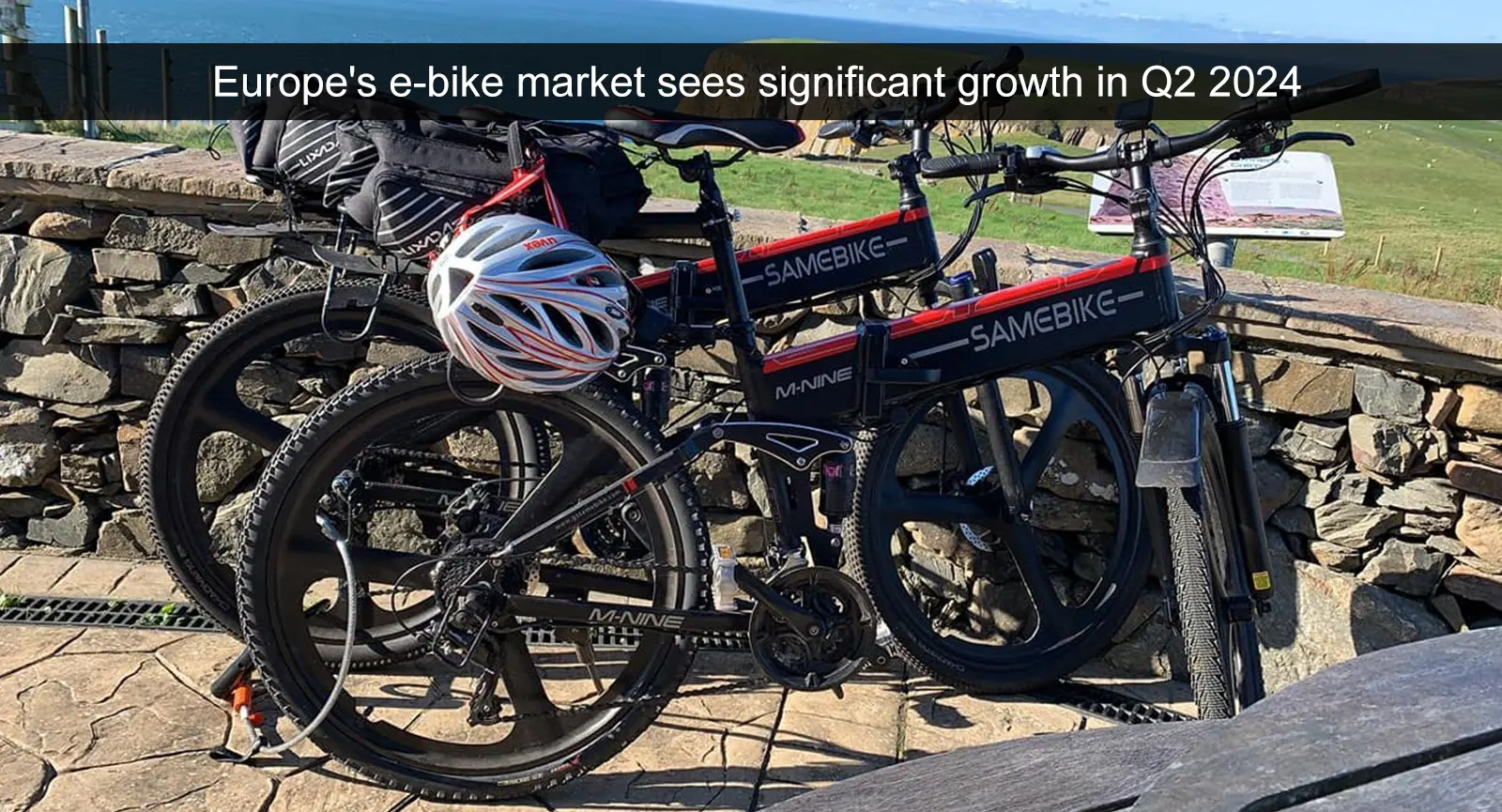
In the second quarter of 2024, the European electric bike market experienced significant growth, with imports reaching 223,000 units, nearly the same as the same period last year, and almost doubling compared to the first quarter of this year.
According to the latest data from Eurostat, in the first half of this year, electric bike imports peaked in May at 81,000 units before dropping to 71,000 units in June, following the typical seasonal trends of the electric bike market.
Imports increased from 125,000 units in the first quarter to 223,000 units in the second quarter, a growth trend comparable to the market performance in the second quarter of 2019, indicating that the market is gradually stabilizing.

Import value did not increase simultaneously
On the supply side, China (mainland), Taiwan (China), and Vietnam, as major electric bike exporting regions, all saw significant growth in exports to the EU. However, this growth was not accompanied by a simultaneous rise in import value, possibly due to price reduction measures taken by Asian manufacturers to clear inventory.
Data shows that in the first half of 2024, the total import value of electric bikes increased by 52%, from €145 million in the first quarter to €220 million in the second quarter. Although export volume increased, the growth in export value was smaller, indicating that the price per electric bike decreased.
Taiwan (China), which remained the largest exporter of electric bikes to the EU in the first half of the year, saw a sharp drop in unit prices due to clearance sales. Data from the second quarter shows the price per electric bike dropped from €1,625 in the first quarter to €1,300, breaking the upward trend since 2021.
The price fell to €1,350 in May and further dropped to €877 in June. Meanwhile, the price of electric bikes from Vietnam increased slightly during the same period, rising from €825 to €948.
Explore the top 10 electric two-wheeler manufacturers in China, Taiwan electric bike manufacturers and top 10 electric bike manufacturers in Vietnam.

Low-price inventory clearance
In this market environment, some well-known brands such as Giant have offered discounts of up to €4,000 on high-end electric bikes through their online stores in the Netherlands. Data from Eurostat suggests that Giant, Merida, and Ideal, the three major bicycle giants, are liquidating large amounts of inventory.
In fact, these large manufacturers’ Q2 financial reports also reflect this trend, with Giant’s revenue in the first half of the year down by 12.6% and Merida’s by 4.1%. The impact of inventory clearance across Asia is now visible in the discount products available throughout Europe.

Steady growth in bicycle imports
At the same time, the import volume of regular bicycles showed steady growth. In the second quarter of last year, 880,000 regular bicycles were imported into the EU, a 45% increase compared to the first quarter.
Although the rise of electric bikes has affected the regular bicycle market to some extent, import value and unit prices have remained stable, showing that demand for traditional bicycles is still strong.

Who are the main buyers in Europe
Germany
In Germany, 27% of electric bike (E-bike) users are aged between 30 and 39, but due to the country’s aging population, the age group of 50 to 64 has the highest E-bike ownership rate, accounting for 30%.
In terms of gender distribution, the German E-bike market is relatively balanced, with 55% male owners and 45% female owners, a notably high proportion of female owners.
Economically, 48% of E-bike users come from high-income households. In Germany, E-bikes are not only a convenient means of transportation but are also becoming a symbol of a high-quality lifestyle. Additionally, 66% of E-bike users live in various urban and rural communities, highlighting the widespread adoption of E-bikes in both rural and urban areas.
In terms of values and preferences, German E-bike consumers particularly value enjoyable interactions and safety. 57% of users consider social interactions important, while 40% focus on product safety.
Additionally, German E-bike users have a strong passion for travel, healthy sports, and outdoor activities, with 50% enthusiastic about participating in various outdoor activities. Regarding media habits, search engines are the main source of information for 47% of users, followed by online stores, video portals, and social media, all of which have over 40% of users’ attention.
Traditional media like mail advertisements and TV commercials still maintain high usage rates at 46% and 43%, respectively. Meanwhile, ads during travel and physical stores are also notable channels, ranking fourth and fifth at 38% and 36%.
You can also check the top 10 electric bike manufacturers in German for your reference.

France
French E-bike consumers have a relatively even age distribution, but compared to other countries, they tend to be younger, with 54% of consumers aged between 18 and 39, and 29% between 30 and 39.
In terms of gender: 58% of owners are male, and 42% are female.
Economically, French E-bike consumers tend to have high household income levels, with 42% coming from high-income households, and 31% from middle-income families. As for leisure activities, French E-bike consumers have diverse interests. Travel is the most popular activity at 39%, followed by sports at 38%.
Additionally, cooking, baking, reading, and outdoor activities are also very popular, each accounting for more than 30% of consumer preferences. In terms of media consumption, French E-bike consumers show a strong interest in digital advertising, with video portals being the primary channel for product information at 44%. Search engines, social media, and video streaming services account for 31%, 31%, and 29%, respectively.
In traditional media, TV remains an important platform for information dissemination, with more than half of users learning about E-bike products through TV. Radio, physical stores, and ads during travel also gain over 30% of attention, offering brands diverse promotion opportunities.
Who are the top 10 electric bike manufactures in France?

Netherlands
In terms of age, the Dutch E-bike market shows a balance between younger and older age groups. 48% of consumers are aged between 18 and 39, with 27% in the 18 to 29 age range, while 50 to 64-year-olds account for 31%.
In terms of gender, males dominate the market, with 61% of E-bike consumers being male.
Economically, Dutch E-bike consumers tend to have high household incomes, with 46% coming from high-income households, and 33% from middle-income families. Regarding values and preferences, Dutch E-bike consumers particularly value enjoyable interactions and a free, comfortable lifestyle. Safety is also an important consideration for 38% of them.
Travel is another major interest, with 55% of E-bike users being enthusiastic about travel. As for media consumption, 40% of users learn about products through social media, and search engines, video portals, brand websites, and apps are also important sources of information.
In traditional media, TV and radio remain vital platforms, accounting for 57% and 54% respectively, while physical stores are also crucial, with 39% of users getting product information from stores.
Explore the top 10 electric bike manufacturers in Netherlands for your reference.


 English
  German
  Italian
  Dutch
Dutch  Danish
  French
  Spanish
  Finnish