Skip to content


The new version of the European Union Machinery Directive 2006/42/EC (Mechanical Directive abbreviation MD) came into force on December 29, 2009 and applies to mobile machinery, mechanical devices, machinery used to transport people and safety accessories.
It is a mandatory certification for the EU market.
Products complying with this Directive, whether produced by enterprises within the EU or imported from other countries, as long as they are sold in the EU market, must bear the CE marking, indicating that the product has complied with the EU’s “New Approach to Technical Harmonization and Standardization” of the basic requirements.
The e-bike standard EN 15194:2017 became a harmonised standard under the Machinery Directive on March 19, 2019, and thus became a mandatory requirement.

And e-bikes sold on the European market will have to meet the requirements of EN 15194:2017, and the CE marking will be required on the entire vehicle.
The standard requires a rated e-bike battery voltage of no more than 48V, a maximum breakaway speed of no more than 25km/h, a maximum continuous power of no more than 250W and a maximum saddle height of at least 635mm for private or commercial use.
The entire bike is required to comply with the MD Machinery Directive, EN12100 Risk Analysis, WEEE Waste Electrical and Electronic Equipment Recycling Directive, RoHS Restriction of Hazardous Substances in Electrical and Electronic Equipment Directive, EMC Electromagnetic Compatibility, and REACH chemical regulations.
National Highway Traffic Safety Administration (NHTSA) regulations classify low-speed e-bikes as consumer products, and e-bike products are subject to the jurisdiction of the Consumer Product Safety Commission (CPSC).
The U.S. Consumer Product Safety Commission (CPSC) requires that low-speed electric bicycles or tricycles manufactured for commercial use must be fitted with pedalable pedals, have an electric motor with an output of no more than 750W(750W electric bikes), have a speed of no more than 32km/h (20mph) for a 77kg (170lb) person riding.
And also they must have an overall weight of no more than 50kg, and the entire vehicle needs to comply with 16 CFR part 1512, ul 2849+ed1:2019.

The Australian Government’s Motor Vehicle Regulations Standards Act (MVRSA) requires all road vehicles to comply with the Australian Design Rules (ADR) before they can be put on the market.
Vehicles covered include bicycles and electric bicycles.
Australian regulations stipulate that electric bicycles must have a rated voltage of not more than 48V, a maximum cut-off speed of not more than 25km/h, a maximum continuous power of not more than 250W(250W e-bike), a maximum saddle height of at least 635mm, and a wheelbase of not less than 640mm, with the exception of racing bicycles and specially designed bicycles.
Complete vehicle requirements comply with AS 15194:2016, AS 1927:2010+A1:2014.

In Japan, the use of electric bicycles is strictly regulated. Japan only allows “smart electric bicycles” to be used on the road, and electric power can only be used to assist human pedaling, with the following specific regulations:
- Under all road conditions, when the speed is less than 15km/h, the size of the electric aid should be close to human power, but it is not allowed to be larger than human power.
- In all road conditions, when the speed exceeds 15km/h, the upper limit of electric power shall be reduced by 1/9 for every 1km/h increase in speed.
- When the speed exceeds 24km/h, the entire vehicle electric assistance system is turned off.
- The whole electric power system shall begin to operate within 1 second after the human pedaling starts, and the electric power system shall be turned off within 1 second after the human pedaling stops.
- In order to save electricity, the intelligent electric bicycle should enter the dormant state after stopping running for a certain period of 3-5 minutes.
- Continuous riding must be ensured, and electric power must not be intermittent.
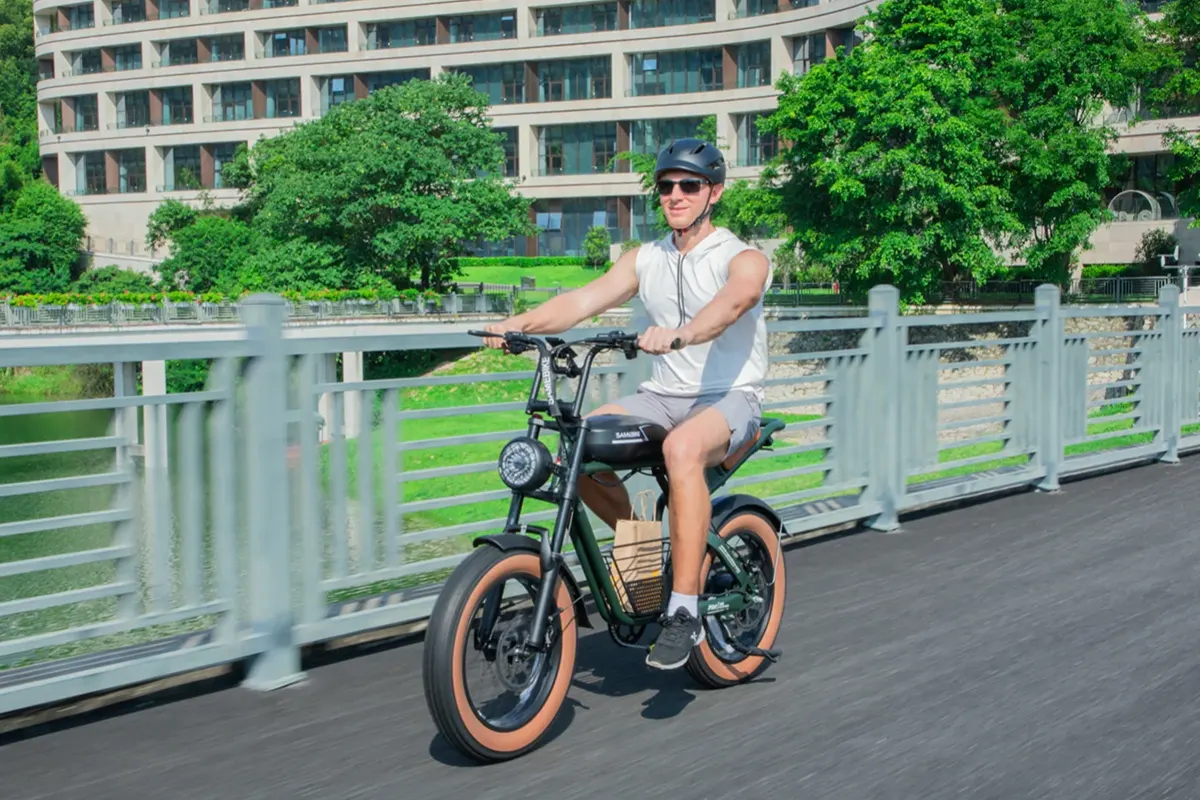
Since its establishment in 2004, Sameway Group has been committed to the research and development, manufacturing and global marketing of lithium electric bicycles and related products for 18 years.
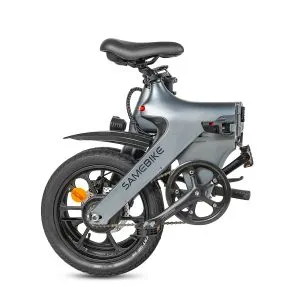
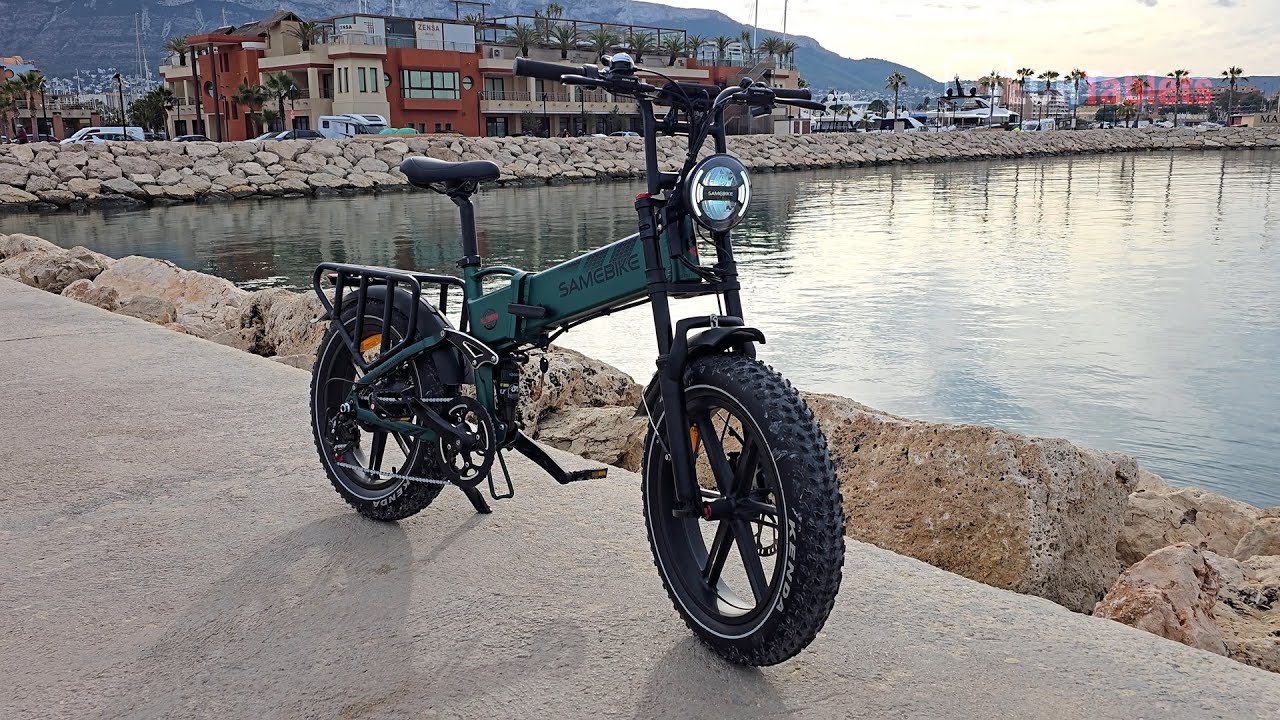
SAMEBIKE is our factory-owned brand, and SAMEBIKE electric bikes have been sold all over the world, now it is a global brand.
Sameway has R&D engineers with more than 10 years of experience, who strongly support OEM/ODM production, and expand Sameway’s production lines.
We understand the relationship between recreation and healthy living, and we firmly believe that energetic sports are a fashionable necessity.
We understand that sports is not a competition, but an attitude to life, and SAMEBIKE electric bikes are willing to face the challenges of life with the honesty of cycling.
You can also visit our SAMEBIKE store to get the best price.


 English
  German
  Italian
  Dutch
Dutch  Danish
  French
  Spanish
  Finnish