Skip to content

Electric bikes have revolutionized personal transportation, offering an eco-friendly, efficient, and enjoyable way to commute, exercise, and explore. Central to the operation of an e-bike is its battery, which powers the motor and determines the range and performance of the bike.
Battery life is a crucial aspect of e-bike functionality, influencing not only how far you can travel on a single charge but also the long-term sustainability of your e-bike investment.
This article explores everything you need to know about e-bike battery life, from its importance and influencing factors to best practices for maintenance and longevity.


What is e-bike battery life?
E-bike battery life refers to two key aspects: the duration a battery can power an e-bike on a single charge (also known as range) and the overall lifespan of the battery before it needs to be replaced.
The range is typically measured in miles or kilometers, while the lifespan is measured in charge cycles – the number of complete charges a battery can undergo before its capacity significantly diminishes.

Why is battery life important for e-bikes?
Battery life is crucial because it directly impacts the usability and convenience of an e-bike. A longer battery life means fewer interruptions for recharging, allowing for extended rides and greater reliability.
Additionally, a battery with a longer lifespan reduces the frequency of replacements, saving costs and reducing environmental waste. For those who rely on e-bikes for daily commuting, a dependable battery is essential for consistent and efficient travel.
How long do e-bike batteries last?
The lifespan of an e-bike battery varies depending on several factors, including the type of battery, usage patterns, and maintenance practices. Generally, electric bike batteries can last between 3 to 5 years or about 500 to 1,000 full charge cycles.
After this period, the battery’s capacity will gradually decrease, meaning it will hold less charge and offer a reduced range. High-quality lithium-ion batteries, which are common in e-bikes, tend to last longer than other types due to their efficient energy density and durability.
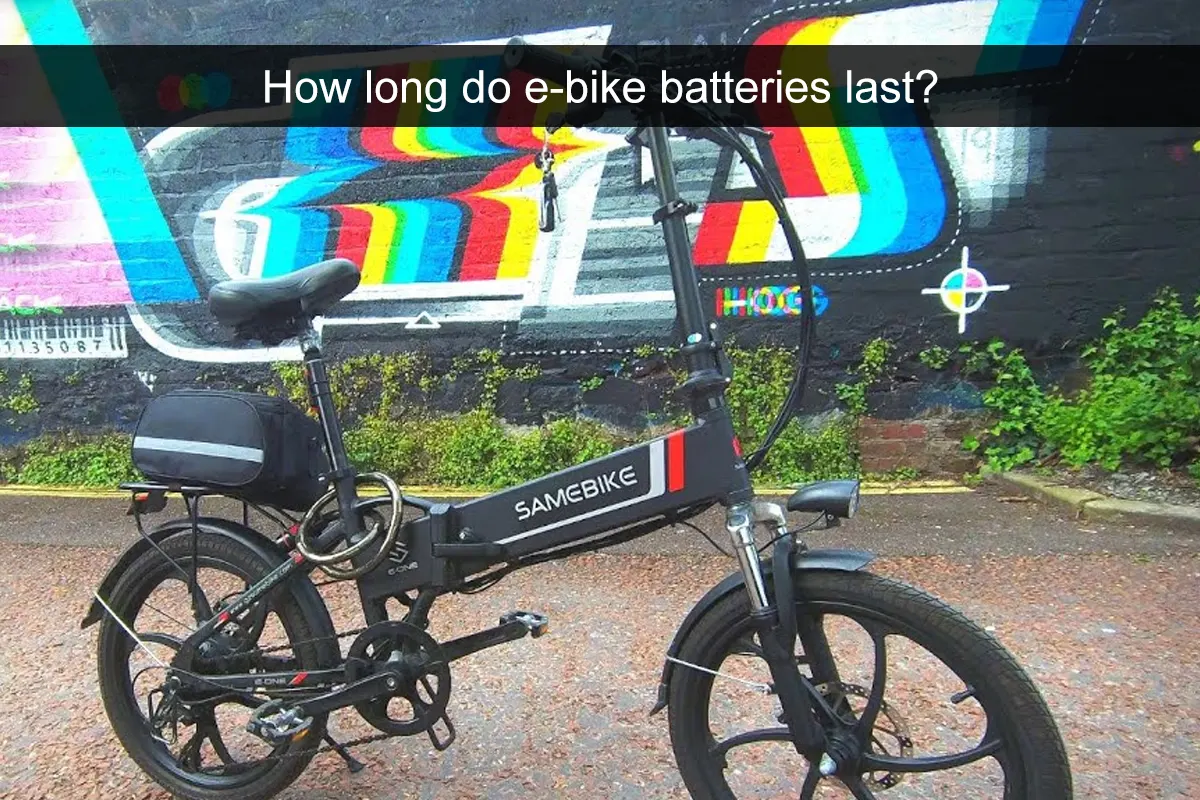
What factors influence the battery life of an e-bike?
Several factors influence both the range and lifespan of an e-bike battery:
- Capacity: The higher the battery capacity (measured in watt-hours or Wh), the longer the range.
- Riding style: Aggressive riding with frequent acceleration drains the battery faster.
- Terrain: Riding on hilly or rough terrain consumes more power than flat surfaces.
- Weather conditions: Extreme temperatures can reduce battery efficiency.
- Weight: Heavier riders or additional cargo increase the load on the motor, reducing battery life.
- Maintenance: Proper care, including regular charging and appropriate storage, prolongs battery life.
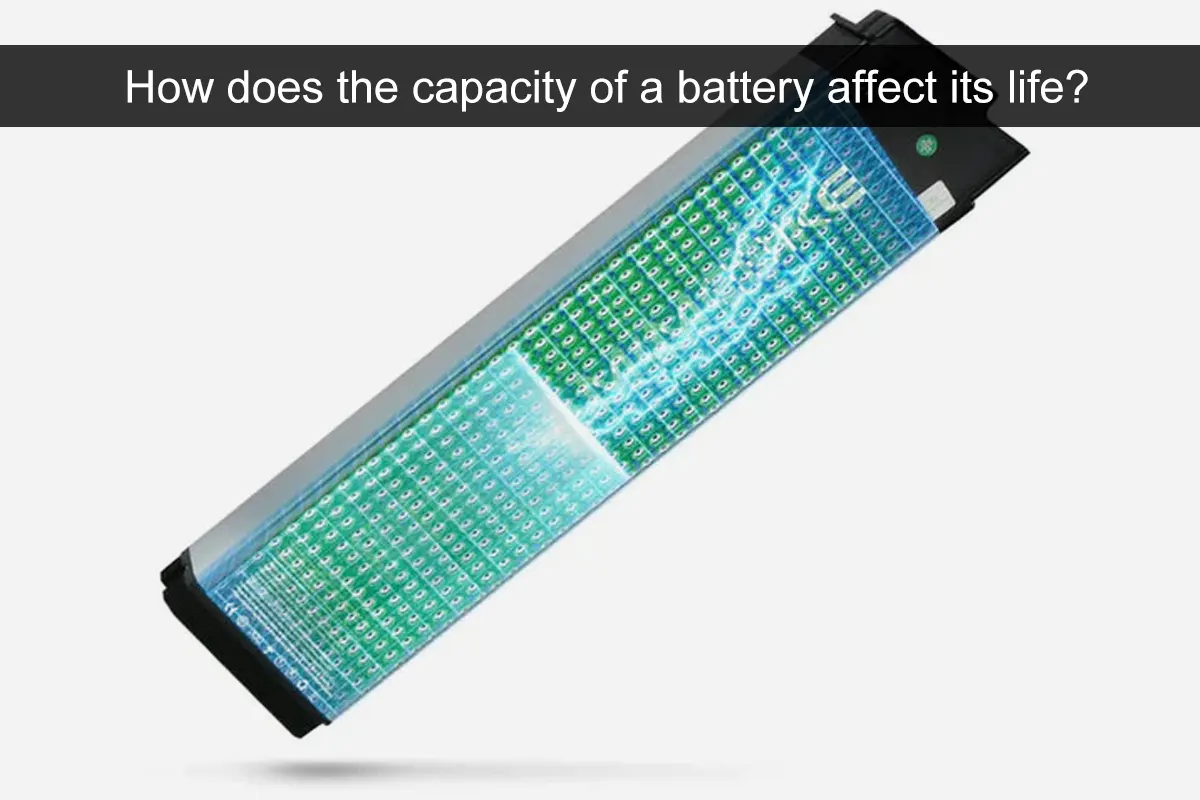
How does the capacity of a battery affect its life?
Battery capacity, measured in watt-hours (Wh), is a direct indicator of how much energy a battery can store and deliver to the e-bike’s motor. A higher capacity means the battery can power the bike for a longer period before needing a recharge, resulting in a longer e-bike range.
However, a larger battery capacity does not necessarily translate to a longer overall lifespan. The number of charge cycles and how the battery is used and maintained also play significant roles in determining the lifespan.
How does riding style impact e-bike battery life?
Your riding style has a substantial impact on battery life. Aggressive acceleration, high speeds, and frequent stops and starts consume more power, leading to quicker battery depletion.
Smooth and steady riding at moderate speeds can help maximize battery efficiency and extend the range. Additionally, using lower levels of pedal assist or eco modes conserves battery power, allowing for longer rides on a single charge.
What role does terrain play in battery consumption?
The type of terrain you ride on significantly influences battery consumption. Riding uphill or on uneven, rough terrain requires more power from the motor, which in turn drains the battery faster.
On the other hand, riding on flat, smooth surfaces uses less energy, allowing the battery to last longer. If you frequently ride on hilly terrain, it’s advisable to invest in a battery with a higher capacity to ensure adequate range.

How do weather conditions affect e-bike battery life?
Weather conditions, particularly temperature, play a crucial role in battery performance. Cold weather can reduce the battery’s efficiency, leading to a shorter range. This is because low temperatures slow down the chemical reactions inside the battery, resulting in lower power output.
On the other hand, extremely high temperatures can cause the battery to overheat, potentially leading to long-term damage and reduced lifespan. It’s important to store and charge your e-bike battery in a temperature-controlled environment to mitigate these effects.
How does the weight of the rider and cargo impact battery life?
The weight of the rider and any additional cargo directly impacts battery consumption. Heavier loads require the motor to work harder, drawing more power from the battery and reducing its range.
If you often carry heavy items or have a higher body weight, you may experience shorter battery life. To mitigate this, consider choosing an e-bike with a more powerful motor and a higher-capacity battery, which can better handle the increased load without significantly reducing the range.

What are the common types of batteries used in e-bikes?
E-bikes typically use three types of batteries:
- Lithium-ion (Li-ion): The most common type due to its high energy density, lightweight, and long lifespan. Li-ion batteries offer excellent performance and efficiency.
- Nickel-metal hydride (NiMH): Less common, these batteries are heavier and have a shorter lifespan compared to Li-ion, but they are more environmentally friendly.
- Lead-acid: The oldest type, rarely used in modern e-bikes due to their heavy weight and low energy density. Lead-acid batteries are cheaper but offer poor performance and longevity.
Among these, lithium-ion batteries are the preferred choice for most e-bike manufacturers due to their superior attributes, including better energy efficiency, lighter weight, and longer lifespan.
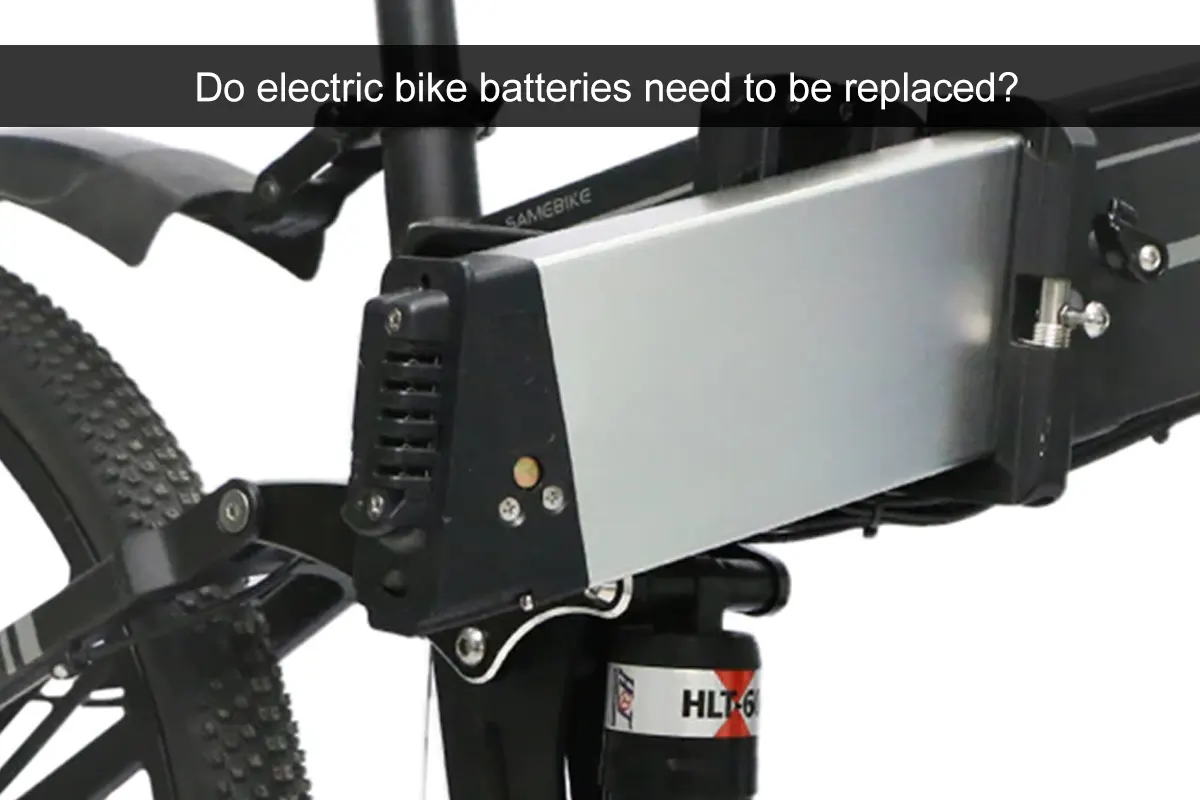
Do electric bike batteries need to be replaced?
Yes, electric bike batteries will eventually need to be replaced. Over time, all batteries experience a reduction in capacity due to the natural wear and tear of charge cycles. As the battery ages, you may notice a decrease in the range your e-bike can cover on a single charge.
When the battery no longer holds a sufficient charge or if it shows signs of physical damage, it’s time for a replacement. Regular maintenance and proper charging practices can help extend the lifespan of the battery, but replacement is inevitable after several years of use.
Is it OK to charge an e-bike battery every day?
Yes, it is generally okay to charge an e-bike battery every day, especially if you use your e-bike frequently. Lithium-ion batteries do not suffer from the “memory effect,” so partial charges do not harm the battery.
In fact, frequent charging can help maintain the battery’s health by keeping it at an optimal charge level. However, it’s important not to overcharge the battery by leaving it plugged in for extended periods after it has reached full charge, as this can lead to overheating and reduced lifespan.
What are the best practices for charging an e-bike battery?
To maximize the lifespan and performance of your e-bike battery, follow these best charging practices:
- Charge before completely drained: Avoid letting the battery drain completely before recharging. Instead, charge it when it reaches around 20-30% capacity.
- Use the correct charger: Always use the charger provided by the manufacturer or one specifically designed for your battery type.
- Avoid overcharging: Disconnect the battery once it reaches 100% to prevent overheating and potential damage.
- Charge in a cool environment: Avoid charging the battery in extremely hot or cold environments, as temperature extremes can affect battery health.
- Regularly check for updates: Some e-bikes come with smart battery management systems that might require occasional software updates for optimal performance.

How do I maintain my e-bike battery?
Proper maintenance is essential for prolonging the life of your e-bike battery. Here are some tips:
- Keep it clean: Wipe down the battery and its connections regularly to prevent dirt and moisture buildup.
- Avoid extreme temperatures: Store and charge the battery in a temperature-controlled environment, ideally between 10°C and 25°C (50°F and 77°F).
- Regular use: Use your e-bike regularly to keep the battery active and maintain its health.
- Check for damage: Periodically inspect the battery for any signs of physical damage, such as cracks or leaks, and replace it if necessary.
How should an e-bike battery be stored when not in use?
If you plan to store your e-bike battery for an extended period, follow these guidelines to ensure it remains in good condition:
- Partial charge: Store the battery at around 50-70% charge. Storing it fully charged or completely drained can harm its longevity.
- Cool, dry place: Store the battery in a cool, dry place away from direct sunlight and extreme temperatures.
- Check periodically: If stored for several months, check the battery every few weeks and recharge it to around 50-70% if it drops below this level.
How to do the e-bike winter storage?

How do I know if my e-bike battery is healthy?
Monitoring the health of your e-bike battery is crucial for ensuring optimal performance. Signs of a healthy battery include consistent range, stable power output, and no significant decrease in performance over time.
If you notice the battery draining unusually fast, a significant reduction in range, or physical symptoms like swelling, it may indicate the battery is degrading and needs to be checked or replaced. Some e-bikes come with battery management systems that provide health diagnostics, which can be helpful for monitoring battery status.
Are there any technologies that improve e-bike battery life?
Several emerging technologies are designed to improve e-bike battery life:
- Battery management systems (BMS): These systems help monitor and manage the battery’s charge and discharge cycles, preventing overcharging and overheating, thus extending battery life.
- Advanced lithium-ion chemistry: New developments in lithium-ion battery chemistry, such as solid-state batteries, promise higher energy density and longer lifespan.
- Regenerative braking: Some e-bikes are equipped with regenerative braking, which captures energy during braking and feeds it back into the battery, slightly extending the range.
- Smart charging: Innovative charging systems optimize the charging process based on usage patterns and environmental conditions, improving battery health over time.

Conclusion
Understanding and managing e-bike battery life is essential for maximizing the performance, range, and longevity of your electric bike.
By considering factors such as riding style, terrain, weather conditions, and proper e-bike maintenance tips, you can ensure that your e-bike battery remains in good health, providing reliable power for years to come.
As battery technology continues to advance, future e-bike batteries are expected to offer even greater efficiency, durability, and sustainability, further enhancing the e-bike experience.


 English
  German
  Italian
  Dutch
Dutch  Danish
  French
  Spanish
  Finnish