Skip to content

E-bikes have revolutionized the way we think about transportation and recreation, offering an eco-friendly, efficient, and exciting alternative to traditional bicycles and motor vehicles.
Among the various types of e-bikes available, full suspension e-bikes have gained popularity for their enhanced comfort, control, and performance, especially on challenging terrains. You can also check the comparison between hardtail vs. full suspension mountain bike for your reference.
But what exactly is a full suspension e-bike, and how does it stand out from other types? In this comprehensive guide, we’ll delve into the intricacies of full suspension e-bikes, exploring their components, benefits, and considerations for riders at all levels.


What is a full suspension e-bike?
A full suspension e-bike is a type of electric bike equipped with both front and rear suspension systems. These systems are designed to absorb shocks and vibrations from uneven terrain, providing a smoother and more comfortable ride.
Unlike hardtail e-bikes, which only have front suspension, full suspension e-bikes offer a dual-suspension setup, making them ideal for off-road adventures, mountain biking, and other demanding riding conditions.
The key feature of a full suspension e-bike is its ability to maintain traction and control over rough surfaces. This is achieved by allowing both wheels to move independently, which helps to keep the bike tires in contact with the ground even on bumpy trails. The result is a more stable and controlled ride, reducing fatigue and improving overall performance.

How does it differ from other types of e-bikes?
Full suspension e-bikes differ from other e-bike types primarily in their suspension setup. Here’s a closer look at how they compare:
| Type | Remarks |
|---|---|
| Hardtail e-bikes | These bikes feature only a front suspension fork, with no rear suspension. Hardtail e-bikes are lighter and generally more efficient on smooth trails or paved roads, but they can be less comfortable and harder to control on rough terrain compared to full suspension models. |
| Rigid e-bikes | Rigid e-bikes lack any suspension system, making them best suited for smooth surfaces like city streets or well-maintained bike paths. They are typically lighter and more affordable but can be harsh on uneven terrain. |
| Full suspension e-bikes | As mentioned, these bikes have both front and rear suspension, providing superior comfort, control, and traction on challenging terrains. However, they are often heavier, more complex, and more expensive than their hardtail or rigid counterparts. |
The choice between these types depends largely on the rider’s needs, terrain preferences, and budget. For those who frequently ride on rough or uneven surfaces, a full suspension e-bike offers significant advantages in comfort and performance.
What are the key components of a full suspension system?
A full e-bike suspension system consists of several key components that work together to provide a smooth and controlled ride. These include:
| Part | Remarks |
|---|---|
| Front suspension fork | The front fork absorbs shocks from the front wheel, helping to maintain control and stability. It typically consists of two stanchions (the upper tubes) and a crown connecting them, with an internal damping system that controls how the fork compresses and rebounds. |
| Rear shock | The rear shock absorbs impacts from the rear wheel, contributing to overall comfort and traction. It usually features an air or coil spring, along with a damping system to manage compression and rebound. |
| Linkage system | This system connects the rear shock to the bike frame and rear wheel, allowing the suspension to compress and rebound in response to terrain changes. The linkage design plays a crucial role in determining the bike's suspension characteristics, such as how it responds to pedaling forces and braking. |
| Pivot points | These are the points where the bike's frame and suspension components are connected, allowing for movement and flexibility. The placement and design of pivot points influence the suspension's performance, including its sensitivity to small bumps and resistance to bottoming out on large impacts. |
| Damping system | Damping controls the speed at which the suspension compresses and rebounds, preventing the bike from bouncing excessively after hitting a bump. Adjustable damping allows riders to fine-tune the suspension to match their riding style and terrain. |
| Spring system | The spring system, either air or coil, provides the force needed to return the suspension to its original position after compression. Air springs are lighter and more adjustable, while coil springs are more robust and offer a consistent feel. |

How does the suspension system impact the riding experience?
The suspension system of a full suspension e-bike has a profound impact on the riding experience, particularly in terms of comfort, control, and performance:
- Comfort: The primary benefit of a full suspension system is the enhanced comfort it provides. By absorbing shocks and vibrations from the terrain, the suspension reduces the strain on the rider’s body, allowing for longer and more enjoyable rides.
- Control: Full suspension systems improve control by keeping the wheels in contact with the ground, even on rough or uneven surfaces. This increases traction and stability, enabling riders to navigate challenging terrain with confidence.
- Performance: The improved traction and control offered by full suspension systems translate into better overall performance. Riders can maintain higher speeds, tackle steeper climbs, and descend with greater confidence, making full suspension e-bikes a popular choice for competitive and recreational mountain bikers alike.
- Fatigue reduction: By minimizing the impact of rough terrain on the rider’s body, a full suspension system reduces fatigue, allowing for longer rides without discomfort.
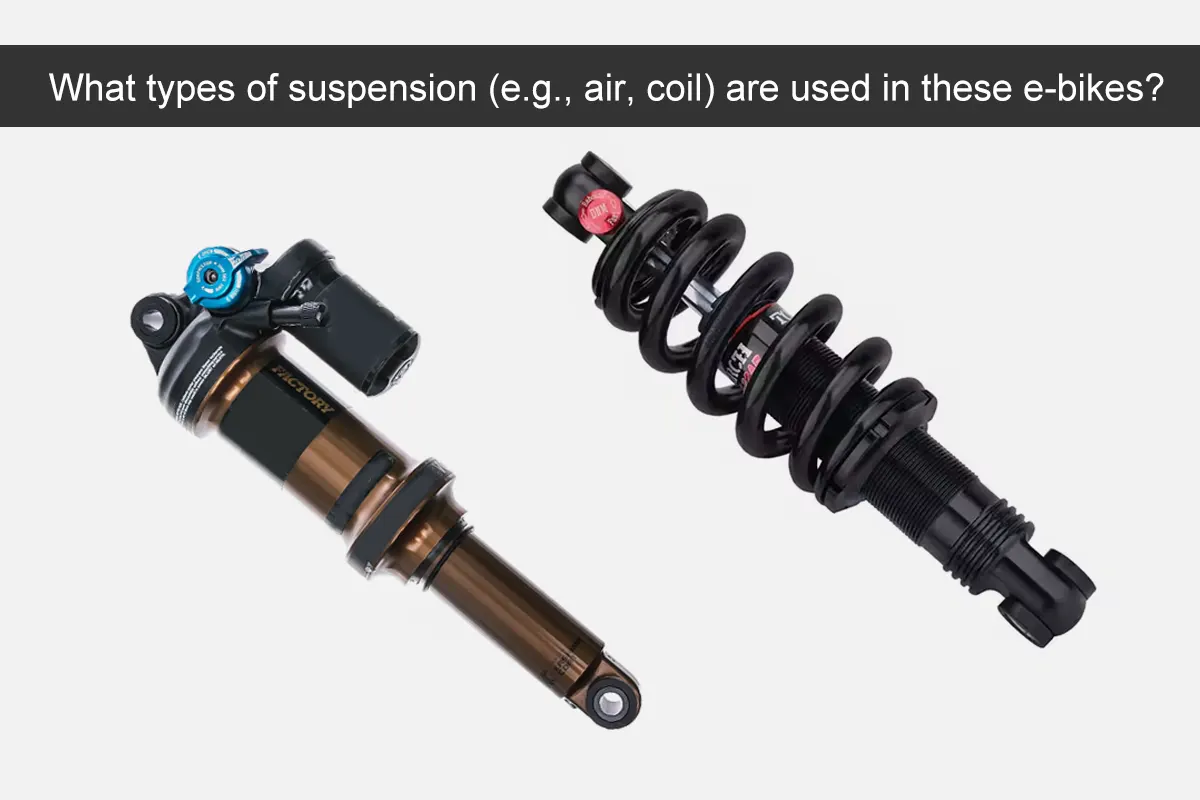
What types of suspension (e.g., air, coil) are used in these e-bikes?
Full suspension e-bikes use different types of suspension systems, each with its characteristics and advantages:
| Type | Remarks |
|---|---|
| Air suspension | Air suspension systems use compressed air to provide the spring force. They are lightweight, highly adjustable, and offer a smooth and progressive feel. Riders can easily adjust the air pressure to match their weight and riding style, making air suspension a versatile choice. However, air suspension systems can be more expensive and require regular maintenance to ensure consistent performance. |
| Coil suspension | Coil suspension systems use a metal coil spring to provide the spring force. They are known for their durability, consistency, and ability to handle large impacts. Coil suspension systems are often preferred by riders who prioritize a plush, consistent feel, especially on rough and technical terrain. However, they are heavier and less adjustable than air suspension systems, making them less versatile for varying conditions. |
| Hybrid systems | Some full suspension e-bikes feature hybrid systems that combine air and coil elements, offering a balance between adjustability and durability. These systems aim to provide the best of both worlds, catering to riders who seek a customized suspension experience. |
What are the pros and cons of a full suspension bike?
Pros
- Enhanced comfort: The dual suspension system absorbs shocks and vibrations, providing a smoother ride on rough terrain.
- Improved control: Full suspension keeps both wheels in contact with the ground, improving traction and stability.
- Better performance: Riders can tackle challenging terrain with more confidence, maintaining higher speeds and better handling.
- Versatility: Full suspension e-bikes perform well in various conditions, from technical trails to smooth paths.
Cons
- Increased weight: The added components of a full suspension system make these bikes heavier than hardtail or rigid e-bikes.
- Higher cost: Full suspension e-bikes are generally more expensive due to the complexity of their suspension systems.
- More maintenance: The additional moving parts require regular maintenance to keep the suspension system functioning properly.
- Less efficiency on smooth terrain: The suspension system can absorb some of the rider’s energy, making full suspension e-bikes less efficient on smooth surfaces compared to hardtails.
Are full suspension e-bikes worth it?
Whether a full suspension e-bike is worth the investment depends on several factors:
- Terrain: If you frequently ride on rough or technical terrain, the comfort, control, and performance benefits of a full suspension e-bike are likely to outweigh the drawbacks. However, if your rides are mostly on smooth paths or roads, a hardtail or rigid e-bike may be a more efficient and cost-effective choice.
- Riding style: Aggressive riders who enjoy tackling challenging trails will benefit most from a full suspension e-bike. For more casual riders, the added complexity and cost may not be justified.
- Budget: Full suspension e-bikes are generally more expensive, so it’s important to consider whether the performance gains align with your budget.
- Experience level: While full suspension e-bikes offer significant advantages, they may not be necessary for beginners or those who ride primarily on smooth terrain. However, for riders looking to push their limits and explore more challenging trails, a full suspension e-bike can be a valuable investment.

Is full suspension good for beginners?
Full suspension e-bikes can be a good choice for beginners, but it depends on the individual’s needs and riding goals:
- Comfort and confidence: The added comfort and control of a full suspension e-bike can help beginners feel more confident on rough terrain, reducing the learning curve and making the experience more enjoyable.
- Learning curve: While the added complexity of a full suspension system might seem daunting to beginners, modern e-bikes are designed to be user-friendly, and many riders quickly adapt to the feel of dual suspension.
- Cost consideration: For beginners on a budget, a hardtail e-bike might be a more affordable option that still offers a good balance of comfort and performance.
- Future-proofing: If a beginner plans to progress to more challenging trails, investing in a full suspension e-bike from the start can be a wise decision, as it will grow with their skills.
Is a full-suspension bike good for long distance?
Full suspension e-bikes can be excellent for long-distance rides, especially on rough or mixed terrain.
However, it’s important to note that the added weight of a full suspension e-bike can be a factor on very long rides, especially if the battery range is a concern. Riders should consider the type of terrain and distance when choosing a full suspension e-bike for long rides.

How do you maintain a full suspension bike?
Maintaining a full suspension e-bike requires regular attention to keep the suspension system and other components in optimal condition:
- Clean regularly: Dirt and debris can accumulate in the suspension components, leading to premature wear. Regular cleaning, especially after rides on muddy or dusty trails, is essential.
- Inspect for wear: Regularly check the suspension components, including the stanchions, seals, and pivot points, for signs of wear or damage. Address any issues promptly to prevent further damage.
- Lubricate moving parts: The suspension system’s moving parts should be lubricated regularly to ensure smooth operation and prevent corrosion.
- Check air pressure: For air suspension systems, it’s important to check and maintain the correct air pressure for your weight and riding style. This ensures consistent performance and comfort.
- Service intervals: Follow the manufacturer’s recommended service intervals for the suspension system. Regular servicing by a professional can help prevent major issues and extend the life of your bike.
- Battery and motor care: In addition to the suspension, don’t forget to maintain the e-bike’s battery and motor according to the manufacturer’s guidelines to ensure optimal performance and longevity.
What should consumers look for when choosing a full suspension e-bike?
- Suspension type: Decide between air, coil, or hybrid suspension systems based on your riding style, terrain, and preferences.
- Frame material: The bike frame materials (e.g., aluminum, carbon fiber) affects its weight, durability, and price. Carbon fiber is lighter but more expensive, while aluminum is more affordable and durable.
- Motor power: Consider the motor’s power and torque, especially if you plan to tackle steep climbs or challenging terrain. A more powerful motor can make a significant difference in performance.
- Battery range: Ensure the e-bike’s battery offers sufficient range for your typical rides. Long-distance riders should prioritize a larger battery capacity.
- Component quality: Look for high-quality components, including the drivetrain, brakes, and suspension system. These components will affect the bike’s performance, durability, and overall experience.
- Fit and comfort: The bike’s fit is crucial for comfort and control. Ensure the frame size and geometry match your body size and riding style.
- Brand reputation: Choose a reputable brand known for producing reliable, high-quality e-bikes. Check reviews and seek recommendations to find a brand you can trust.

How do rider weight, height, and riding style influence the choice of suspension?
- Weight
Heavier riders may require a stiffer suspension setup to prevent excessive sag and bottoming out. Adjustable air suspension systems are ideal, as they allow riders to fine-tune the air pressure to match their weight.
- Height
The rider’s height affects the bike’s fit and geometry, which in turn influences how the suspension performs. Taller riders should ensure the frame size and suspension setup are appropriate for their height to maintain comfort and control.
- Riding style
Aggressive riders who tackle technical trails may prefer a more robust suspension system with a coil spring, while those who prioritize versatility and adjustability may opt for air suspension. The suspension setup should match the rider’s style and the terrain they frequently encounter.
Can I store my full suspension bike upside down?
Storing a full suspension bike upside down is generally not recommended, especially for extended periods.
If you need to store your bike upside down for short periods, such as during transport, it’s usually fine. However, for long-term storage, it’s best to keep the bike in an upright position to avoid potential issues.

Conclusion
Full suspension e-bikes offer a compelling blend of comfort, control, and performance, making them an excellent choice for riders who enjoy tackling rough and challenging terrain. While they come with added weight, cost, and maintenance requirements, the benefits often outweigh the drawbacks, especially for those who value a smooth and stable ride.
Whether you’re a beginner or an experienced rider, a full suspension e-bike can enhance your riding experience, allowing you to explore new trails and push your limits with confidence.
When choosing a full suspension e-bike, consider factors like suspension type, rider fit, and intended use to find the perfect match for your needs. Explore the top 10 economical full suspension mountain bike for your reference.


 English
  German
  Italian
  Dutch
Dutch  Danish
  French
  Spanish
  Finnish