Skip to content

With the development of the automotive industry, ABS/CBS/TCS, which were previously only available in cars, are now being applied to electric vehicles, promoting the improvement and development of the electric vehicle industry’s technological level. This article discusses the demand for e-bike with ABS, a commonly used safety technology in the automotive industry.


What's e-bike with ABS?
On the car, e-bike with ABS can maintain partial rotation of the wheels in emergency situations, thereby enabling the car to maintain steering control capability and a certain level of driving stability, improving the safety performance of the vehicle during emergency braking or wet road driving.
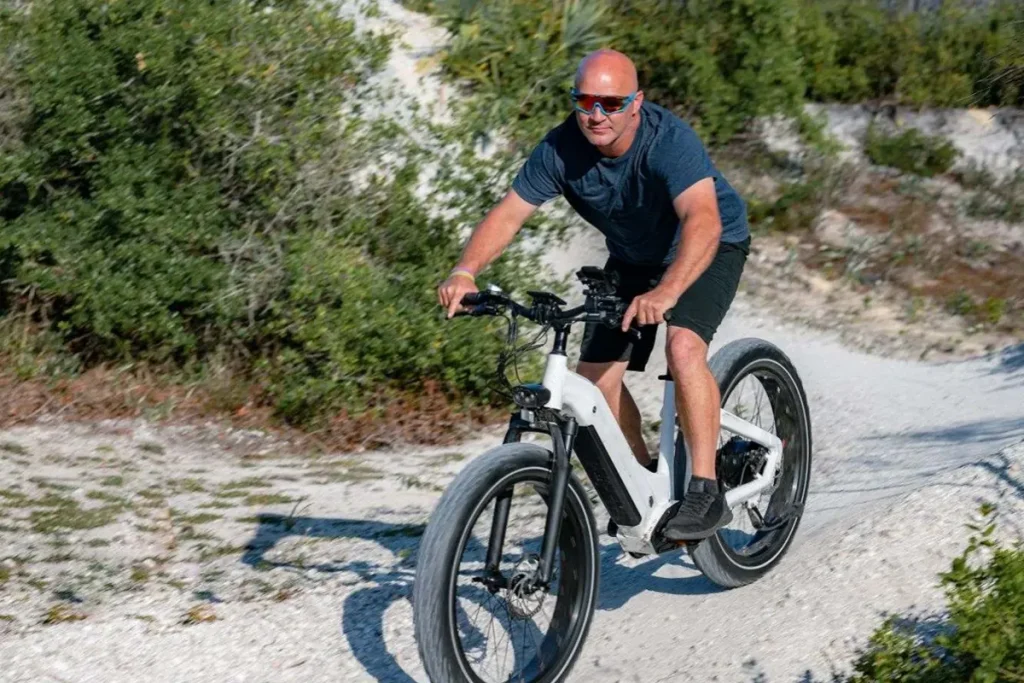
When riding an electric bike, the ABS system can automatically control the braking force during emergency braking to prevent the wheels from completely locking up. The wheels are in a rolling and sliding state, which ensures the grip and stability of the vehicle, avoids dangerous situations such as side slip, tailspin, and loss of control caused by wheel lock up, and greatly reduces the probability of accidents.
In short, ABS is equivalent to automatically creating higher frequency and faster braking for car owners. When wheel lock is detected, that is, when the wheel stops rotating due to the brake being pressed to the bottom, it will automatically release the brake and then re brake, allowing the wheel to keep rotating instead of completely locking. This can also shorten the braking distance, which is now a standard configuration for cars and motorcycles.

What's the difference of e-bike?
The principle of e-bike with ABS is similar to that of cars: ABS detects the speed of each wheel in real time through speed sensors installed on the front and rear wheels, and the wheel speed signal is fed back to the controller to achieve precise adjustment of braking force.
It is somewhat different from ABS on traditional cars or motorcycles.
Firstly, the anti lock braking system is only applicable to the front wheels. When the front wheel sensor continuously monitors the speed and strives to eliminate the effect of lock up, the rear wheel sensor will also monitor the lift of the wheels and cooperate with the front wheel sensor.
For example, when the rider’s front wheel brakes are tightened or the rear wheel suddenly lifts due to inertia, which poses a risk of the rider crossing the handlebars, the braking pressure will be temporarily reduced. We have discussed the issue of front brakes vs rear brakes on e-bikes – which is better, the article is here for your reference.
Secondly, e-bike with ABS does not have sensory feedback such as shaking. Generally, when ABS is activated in a car, the brake pedal will shake, but e-bike does not vibrate the handlebars. The e-bike ABS manufacturer explains that this is to reduce confusion during critical moments of emergency braking.
E-bike with ABS is it worthy?
The advantages of e-bike with ABS
Maintain steering control ability: When an electric bicycle is equipped with ABS, the rider can still maintain control of the vehicle during braking, and the wheels will not lose their steering ability due to locking. This enables riders to avoid or adjust their direction of travel in emergency situations, increasing their ability to respond to unexpected situations.
Shorten braking distance: The ABS system can ensure that the wheels work in the optimal braking state. Installing a battery or dual battery on e-bike will increase the braking distance, and even on rainy or mountainous roads, e-bike speed of 20 kilometers per hour, the ABS effect can be reflected.
In addition, for inexperienced drivers, they may not be able to handle the super strong braking force of modern disc brakes. Compared to electric bicycles without ABS, it can shorten the braking distance to a certain extent, allowing the vehicle to stop faster and ensuring the safety of the rider.
The Disadvantages of e-bike with ABS
Is it all types of e-bike can use this technology?
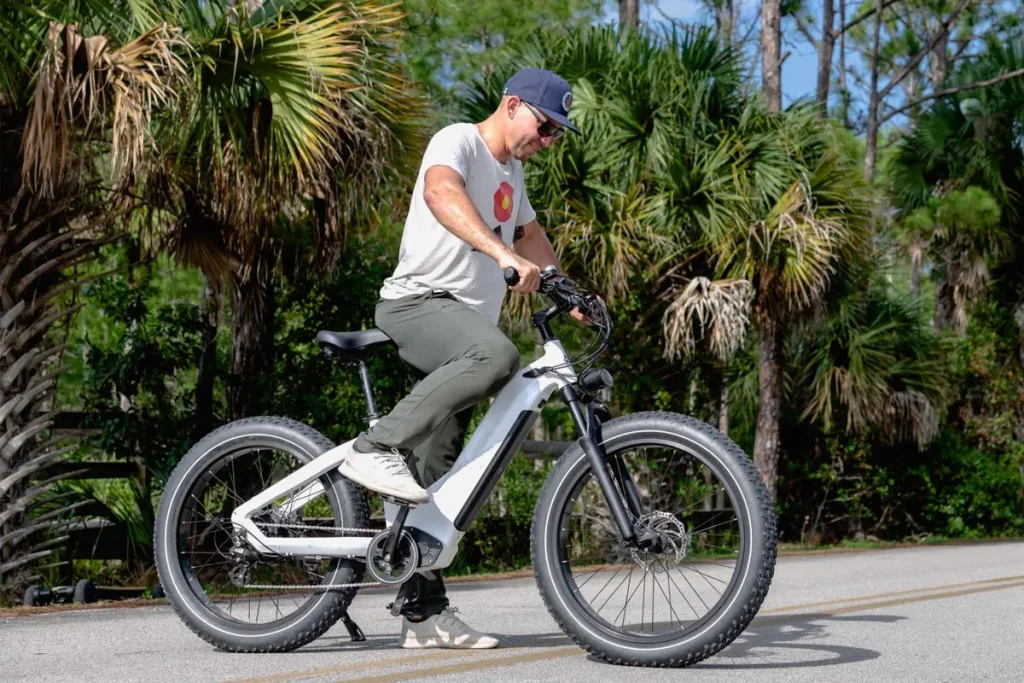
Currently, ABS systems have become popular among some high-end electric bicycles. E-bike with ABS are more likely to be favored by consumers. However, the cost of e-bike with ABS is relatively high, which can lead to a relatively high selling price for electric bicycles. A large brand of electric bicycles with ABS can often be purchased at a price of over 1000 dollars.
When purchasing affordable and popular electric bicycles on a daily basis, you can choose the appropriate braking method according to your own needs and budget. For example, for daily commuting and leisure cycling, raising the brakes is already sufficient to meet the demand; In harsh environments or situations with higher requirements for braking performance, disc brakes including hydraulic disc brakes are a better choice; For certain types of electric bicycles, such as cargo bikes or mountain bikes, drum brakes may be more popular due to their stable braking effect.
Conclusion
The installation of ABS system on electric bicycles is a beneficial development trend. Looking ahead to the future, with the advancement of technology and the increasing demand for safety performance from consumers, innovation and improvement of brake systems will become an important development direction for the electric bicycle industry.


 English
  German
  Italian
  Dutch
Dutch  Danish
  French
  Spanish
  Finnish