What do you do when the battery of your electric bike starts losing its spark? The inevitable aging of ebike batteries poses a dilemma: to repair or to replace?
This discussion navigates through the lifecycle of these electric bike batteries, highlighting the critical junctures that determine their fate.
As ebike batteries age or show signs of malfunction, understanding how to approach these issues becomes crucial. Here are effective strategies for assessing battery health and making informed decisions that maintain the operational integrity of your ebike.
Today, we’ll be going through the practical tips for ebike battery repair, managing your ebike’s power source and ensuring its longevity, keeping your rides smooth and your operations efficient.
Life of ebike battery expectancy
Typically, an ebike battery is expected to last between three to five years, or about 1,000 full charge cycles on average, depending on use.
However, this lifespan can vary based on several operational factors that may impact the battery’s ability to maintain its charge over time.
Critical factors affecting battery health
Storage conditions
Proper storage is critical, batteries should be kept in cool, dry environments away from extreme temperatures to prevent accelerated degradation. You can also check the e-bike battery safety for your reference.
Usage patterns
The frequency and intensity of battery use play a significant role. Batteries used extensively in high-demand scenarios may degrade faster.
Implementing a usage rotation can help in extending the life of each unit in the fleet.
Maintenance and charging practices
Implementing and adhering to rigorous maintenance schedules can prolong battery life.
Optimal charging practices, such as keeping the battery charge between 20% and 80%, are essential to maximize lifespan and ensure consistent performance across the fleet.
How to extend you e-bike battery life?
Maintaining and extending the life of an ebike battery involves careful management of charging practices, storage conditions, and regular troubleshooting to address common issues.
Here are some effective strategies and solutions:
Optimal charging practices
Charge the battery regularly, but avoid overcharging. Using a timer can help prevent the battery from being charged beyond the necessary level, particularly if the charger isn’t “smart”.
Charge the battery in a temperature-controlled environment, ideally between 32°F and 104°F, to prevent damage from extreme temperatures.
Ideal storage conditions
Store the battery in a cool, dry place away from moisture and extreme temperatures.
If the battery needs to be stored for an extended period, it should be charged to about 75%-80% and checked monthly to ensure it doesn’t drop below this level.
Common battery issues
If the battery experiences reduced range, it might be due to it not being able to hold a charge as effectively.
Before considering a replacement, ensure the correct charger is used and reduce the bike’s load to conserve battery power.
Overheating can occur from overcharging or prolonged use. Make sure to use the correct charger and allow the battery to cool between uses.
If the battery won’t charge, check for secure connections and ensure the charger is functioning properly. If issues persist, a reset or professional check may be required.
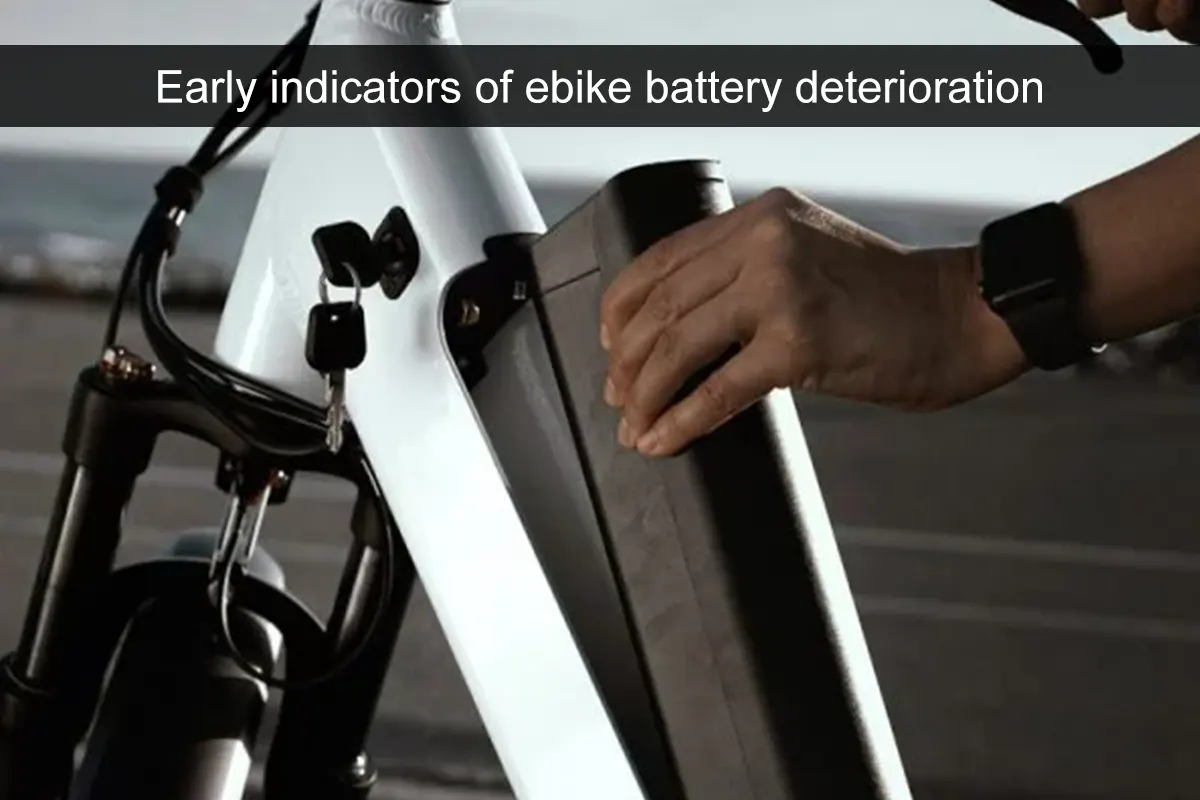
Early indicators of ebike battery deterioration
For businesses operating ebike fleets, recognizing the early signs of battery deterioration is essential for maintaining operational efficiency and reducing unexpected downtimes. How to test an e-bike battery?
Understanding these indicators can help in making timely decisions about whether a battery needs servicing or replacing. Here’s what to look for:
Decreased range
One of the most noticeable signs of battery wear is a reduced range. If your ebikes are not achieving the distances they once did on a full charge, this could indicate that the battery’s capacity to hold a charge is diminishing.
This reduction in range can be gradual, but it becomes more apparent through a decrease in the overall performance of the ebike.
Power fluctuations
Ebike batteries beginning to fail might show inconsistent power delivery. This can manifest as sudden losses of power during rides or unexpected shutdowns.
These symptoms suggest internal issues with the battery cells or the battery management system (BMS) that require immediate attention.
Longer charging times
Another indicator of battery health is the amount of time it takes to charge.
If batteries start taking significantly longer to reach full charge than they did previously, this could be a sign of aging cells.
In some cases, the battery may not reach full capacity at all, which is a clear signal that the battery may need to be serviced or replaced.
Physical signs of damage
Physical inspection can reveal issues such as swelling, which is a serious safety concern.
Swollen batteries may indicate overheating or internal damage, which not only impairs function but also poses risks of fire or bursting.
Any visible damage such as cracks or leaks is a definitive reason to stop using the battery immediately and consult a professional.
Increased self-discharge
Batteries that lose their charge more quickly while in storage may be suffering from increased self-discharge.
This is often due to aging cells and can be accelerated by improper storage conditions, such as extreme temperatures or moisture.
Voltage irregularities
Monitoring the battery’s voltage can also provide insights into its condition. A healthy battery should maintain a stable voltage throughout its use.
If voltage measurements fluctuate widely or drop significantly under load, this could indicate that the battery is unable to sustain its nominal output, signaling degradation.
Ebike battery repair vs. replace
When managing a fleet of electric bikes, the decision to repair or replace a battery is pivotal for maintaining operational efficiency and managing costs.
Understanding when to choose one option over the other can significantly impact the lifespan and performance of your ebikes.
When to repair
Repairing an ebike battery can be a cost-effective solution if the issue is specific and contained, such as replacing faulty BMS (Battery Management System) components or damaged cells. Repair is feasible when:
- The overall structure of the battery is intact, and only specific components need replacement.
- The cost of repair is significantly lower than replacement, especially for newer batteries where a small fix can extend life considerably.
- The battery’s capacity has diminished slightly but still functions within acceptable limits for its intended use.
When to replace
Replacement becomes necessary under several circumstances:
- The battery is old and has significantly reduced capacity affecting the bike’s performance.
- Repairs are not cost-effective, i.e., the cost of repair approaches or exceeds the cost of getting a new battery.
- The battery has structural damage or severe degradation that cannot be safely repaired.
Here’s a simple table to help decide between ebike battery repair vs replace:
| Condition | Ebike battery repair | Replace |
|---|---|---|
| Minor component failure | ||
| Significant capacity loss | ||
| Cost of repair > 50% of new | ||
| Available technological upgrade | ||
| Structural damage |
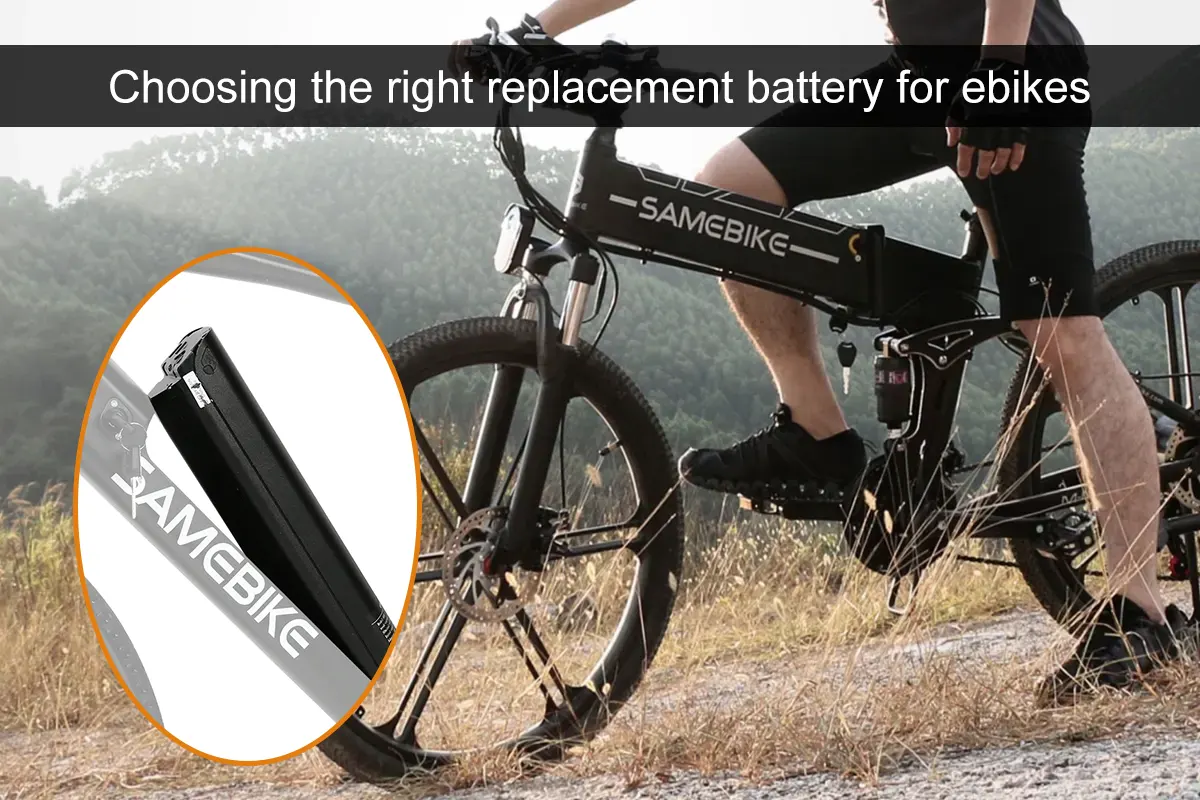
Choosing the right replacement battery for ebikes
When selecting a replacement battery for your ebike fleet, several key factors must be considered to ensure compatibility, optimal performance, and reliability. Here’s what you need to know(Who are the top 10 two-wheeler battery companies in the world):
Compatibility
The foremost consideration is ensuring that the new battery is compatible with your ebike’s system.
This involves checking the battery’s voltage and configuration to match your bike’s motor and controller.
It’s crucial to use a battery that fits properly and communicates correctly with the bike’s electronic systems to avoid potential operational issues.
Performance
Battery capacity, measured in watt-hours (Wh), directly affects the range and power delivery of your ebike.
Higher capacity batteries provide longer ranges and are suitable for more demanding applications, but they also come with increased weight and size.
You should balance the battery’s weight with the bike’s design to maintain handling and stability.
Vendor reliability
Selecting batteries from reputable vendors is critical. Look for suppliers that offer proven battery quality and reliable customer support.
Batteries should meet standard safety regulations such as BS EN 50604‑1 and UN38.3, which are indicators of quality and safety in transportation and usage.
Battery technology
Lithium-ion batteries are the most common due to their high energy density and long life span.
Technologies within this category, like Lithium Iron Phosphate (LiFePO4), offer different benefits such as increased safety and longer lifecycles.
Evaluate the specific needs of your business to choose the most appropriate technology.
Economic considerations
Consider the total cost of ownership, which includes the purchase price, lifespan, maintenance, and any potential savings from increased efficiency.
A higher initial investment in a quality battery can lead to longer-term savings in replacement and maintenance costs.
Wrap up
To effectively manage your ebike batteries, focusing on both operational efficiency and sustainability is essential.
Adopting best practices in battery management can greatly extend the life and performance of your ebike fleets.
Ensure you’re maintaining batteries properly, choosing the right replacements, and staying informed on the latest battery technologies.
For expert guidance tailored to your specific needs, visit SAMEBIKE electric bike and make the most of your investments and keep your e-bikes running smoothly with our specialists