Skip to content


New Jersey legislation requires all e-bike riders to register their vehicles and obtain appropriate insurance coverage.
With the increasing popularity of e-bikes and the increase in related accidents, the implementation of registration and insurance requirements can enhance riders’ safety awareness and reduce the number of accidents, and insurance can also provide appropriate compensation for accident victims.
In addition, through the registration system, the government can better grasp and manage the use of e-bikes, thus providing data support for urban transportation planning and safety management.

California plans to mandate special driver’s licenses for e-bike riders.
The bill would prohibit children under the age of 12 from riding e-bikes, and any rider over the age of 12 who does not have a driver’s license for an automobile would be required to complete an online course, pass a written test, and obtain a state ID card in order to legally operate an e-bike.
Because e-bikes typically travel at higher speeds than traditional bikes, riders need to have a higher level of driving skills and awareness of traffic rules, and the gradual underage of riders has left a group of riders without the appropriate knowledge of regulations and experience to deal with them.

Mandatory education and testing programs are an effective means of improving riders’ knowledge of traffic rules and driving skills by ensuring that riders have the necessary safety knowledge and skills before hitting the road, thereby reducing accidents and ensuring public safety.
In order to combat high-speed and high-power e-bikes and catch riders who illegally modify e-bikes, the Netherlands has introduced a roadside test platform that locks the front wheel of the bike into a machine, then mounts the e-bike, pedals it to maximum speed and checks when the motor shuts down to measure maximum power.
The motor power of the e-bike will be cut off when it reaches the preset maximum speed, but many riders will increase the speed of the vehicle through technical means, which not only violates the regulations, but also increases the risk of road traffic.
Therefore, such inspections can effectively combat high-speed and high-power e-bikes and reduce road accidents. You can also check the most powerful electric bike and the fastest electric bike for your reference.
Secondly, major e-bike motor manufacturers such as Bosch have developed programs to block such modifications, but many motor manufacturers cater to the market by producing models that can exceed the speed limit without modifications.
So such inspections can also serve as a regulator for e-bike manufacturers, preventing them from producing models that can exceed the speed limit without modifications.
And thus ensuring that all e-bikes sold in the market comply with the regulations.
The inspection also serves as a regulatory tool for e-bike manufacturers to prevent them from producing models that can exceed the speed limit without modification, thus ensuring that e-bikes sold on the market comply with the prescribed maximum speed.
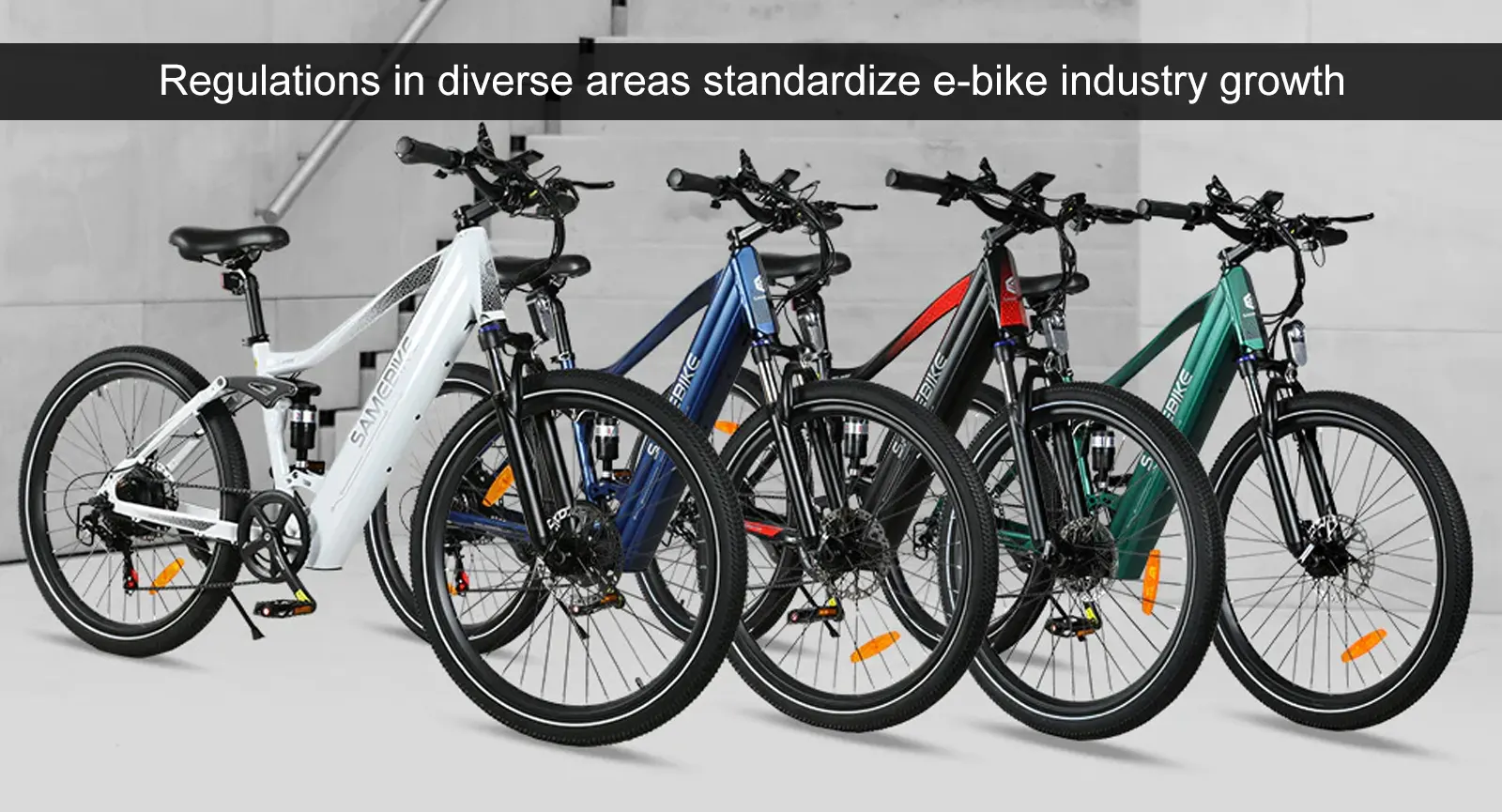
As the e-bike industry is growing rapidly around the world and becoming an important part of urban transportation systems, the promulgation of appropriate regulations can promote the healthy and sustainable development of the e-bike industry. What about the e-bike market?
The implementation of the regulations not only improves the industry standard and promotes the safe use of e-bikes, but also provides a solid foundation for the sustainable development of the industry.



 English
  German
  Italian
  Dutch
Dutch  Danish
  French
  Spanish
  Finnish